
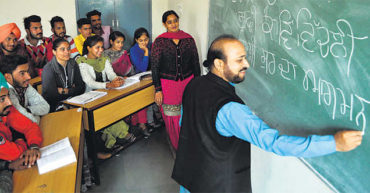
An Introduction to Punjabi
Punjabi is the native language of the Punjabi people and it is the eleventh most spoken language in India. It also has a great presence in other countries – with it being the most spoken language in Pakistan, third most in the United Kingdom and fifth most in Canada. Overall, there are around 102 million native speakers worldwide and this stems across around 150 countries – making it one of the most widespread anguages on the planet. In India, the language is predominantly spoken in the North Western region, however there are Punjabi speakers across the country, with some having moved for work or educational opportunities.
Punjabi is not just a language; it is a link to a culture that can be traced back thousands of years in the same region. It has many different dialects depending on where it is spoken. In India, it is written n a script known as Gurmukhi but it is often also written in a Latin script due to the influence of the English language in the country.
There is also a Punjabi University – which is only the second university in the world to be named after a language. It works to develop teaching, materials and software in the language to promote it around the world.
The popularity of Punjabi
The popular Bollywood, frequently uses songs that are fully or partly sung in the Punjabi language.These songs are very popular and top the charts across the Indian subcontinent. It is estimated that Punjabi songs from Bollywood movies make up around 50% of the chart listings in the region. This means that the language is being listen to and used by millions of people across the country. The popularity of Punjabi music is evidenced in the fact that the song Laung Laachi – the title song from a Bollywood film is one of the most viewed YouTube videos in the whole of India.
The Indian State of Punjab, made Punjabi one of its official languages in 1966. The Punjabi language had been spoken in this region for over 1000 years previously, but this was the first time that it was cognised as an official language, giving it a sense of status and cementing its importance in regional history and culture. There are other regions of the country, that also have high levels of Punjabi speakers however, recently there has been concern for the future of the language as there have been accusations that the language is being discriminated against by the government compared to other native languages in the country.
Is Punjabi being censored?
There are many reasons why many believe that the language of Punjabi is being discriminated against and treated unfairly – from the removal of it from the list of official languages in some regions, to the lack of written resources and media delivered in Punjabi. Below we will detail some of the main concerns in more detail for you to understand the importance of this.
The J&K Official Languages Bill
Last year, many Sikh groups in the regions of Jammu and Kashmir were disappointed with the Jammu and Kashmir Official Languages Bill, which excluded Punjabi from the list of official languages in the egions. The languages of the region are now officially listed as Urdu, Kashmiri, Dogri, Hindi and English. The groups held protests to show their unhappiness and anger, stating that the Languages Bill was a ‘discriminatory move’ and ‘total neglect’ of the minority Punjabi community.This bill was a shock to many Punjabi speakers as until 1981, the Punjabi language was compulsory to study just like Urdu in both regions. The omission of Punjabi from the bill signifies that some leaders do not believe that it is as important as other languages in the region, and neglect to recognise its importance in history and culture. Political leaders and their parties have been criticised for staying silent over this issue and not speaking out against the languages bill.
The Centre responsible for the Official Languages bill stated that their decision was based on public demand. However, Chairman TS Wazir, chairman of the J&K Gurdwara Parbandhak Board pointed out that Punjabi was officially recognised in the Constitution of J&K, and therefore should be included as one of the official languages to help preserve and promote it within the Union Territory and beyond. The language is taught in many schools, colleges and universities across the area and the J&K Academy of Art publishes a magazine in the language – showing that it still has an important influence in the area. The problem is, if the language has been derecognised, will students continue to learn and study the it, or will they opt to study another official language. There are real concerns that this will lead to Punjabi dying out.
If Punjabi is not recognised as an official language in the region, will many companies hire workers that speak the language as their native tongue, will the newspapers print stories in Punjabi and will it be taught in the schools. These are all concerns held by many as it appears the language is in grave danger.
Availability of Punjabi resources
As well as the Languages bill, there are other pieces of evidence that show us that the Punjabi language is under threat. Amazon India is one of the main places to order books online. When we look at the number of books for sale in each language, there are more Hindi, Marathi, Tamil, Telugu, Bengali, Malayalam, Kannada and Gujarati books available to be purchased than Punjabi ones. This shows us that access to Punjabi literature is less than other languages spoken in the region. To put this into context, there are around 322 million speakers of Hindi in India (according to the 2011 census excluding Bhojpuri and Rajasthani), and there are 33 million Punjabi speakers – around 10 percent of the Hindi speaking population. Therefore, you would expect the books available in Punjabi to be 10 percent of the number of Hindi books – when in fact it is only around 2%. This shows that Punjabi literature is underrepresented in some large online stores.
In addition to Punjabi books, there is evidence from viewership numbers on the BARC India website that Punjabi programmes are not as popular as those in other languages. The number of people viewing these programmes is lower than expected when you take into considering the percentage of the population that speaks it.
Both these examples show that the Punjabi language is becoming less common and less accessible – which means that it is slowly diminishing. Therefore, it is important that more people try to learn and derstand the language so that it’s cultural and historical importance does not disappear.
Why is it important to study Punjabi?
Punjabi is a language with a rich culture and heritage – it can be traced back in the region for thousands of years and it is therefore important to keep learning and studying it, to understand our past and traditions. Many language experts suggest that language is a door to a person’s history and links our memories and past experiences to our family. A lot of parents and grandparents that speak Punjabi are not fluent in any other languages, and therefore it is vital for younger generations to learn it and connect with their family.
To learn more about the past, we need to be able to understand the language that was spoken to read ancient texts and study ancient artefacts. They key to our success in the future is understanding the past. In addition to this, the Sikh holy scripture, the Shri Guru Granth Sahib is written inGurmukhi/Punjabi script so to fully understand and connect to it, Punjabi would be an advantage.When we are looking to the business world – Punjabi is spoken in around 150 countries around the world and it is officially recognised by the United Nations and ranks tenth in their list of the most widely spoken languages. Therefore, many businesses will have Punjabi speakers and workers. If the Punjabi language continues to reduce, there will be a need for Punjabi speaks to work as communicators and translators for those that speak this language as it becomes more uncommon as many people will not know about it.
The more people that learn the language, the more it is likely to be accepted by others – being used more commonly in business, schools, universities and local governments. It is not going to be recognised if the number of people that speak it continues to decrease. Therefore, in order to stop the language dying out – start learning Punjabi today.
We can help with this as we offer Punjabi language lessons for both children and adults. Our lessons are designed to help you understand the language and are delivered in a way that is easy to understand. We believe that learning Punjabi is vital to keep the language from becoming extinct and is a way to stand up to the government against the discrimination faced by Punjabi speakers. If you have any questions, or would like to learn this amazing language, feel free to contact us. We can’t wait to start teaching you Punjabi!